
Currently Empty: ₨ 0
What Is a Multivitamin? Things You Don’t Know About
In simple terms, multivitamins are supplements that contain a combination of essential vitamins and minerals designed to support overall health. These nutrients help the body

Currently Empty: ₨ 0
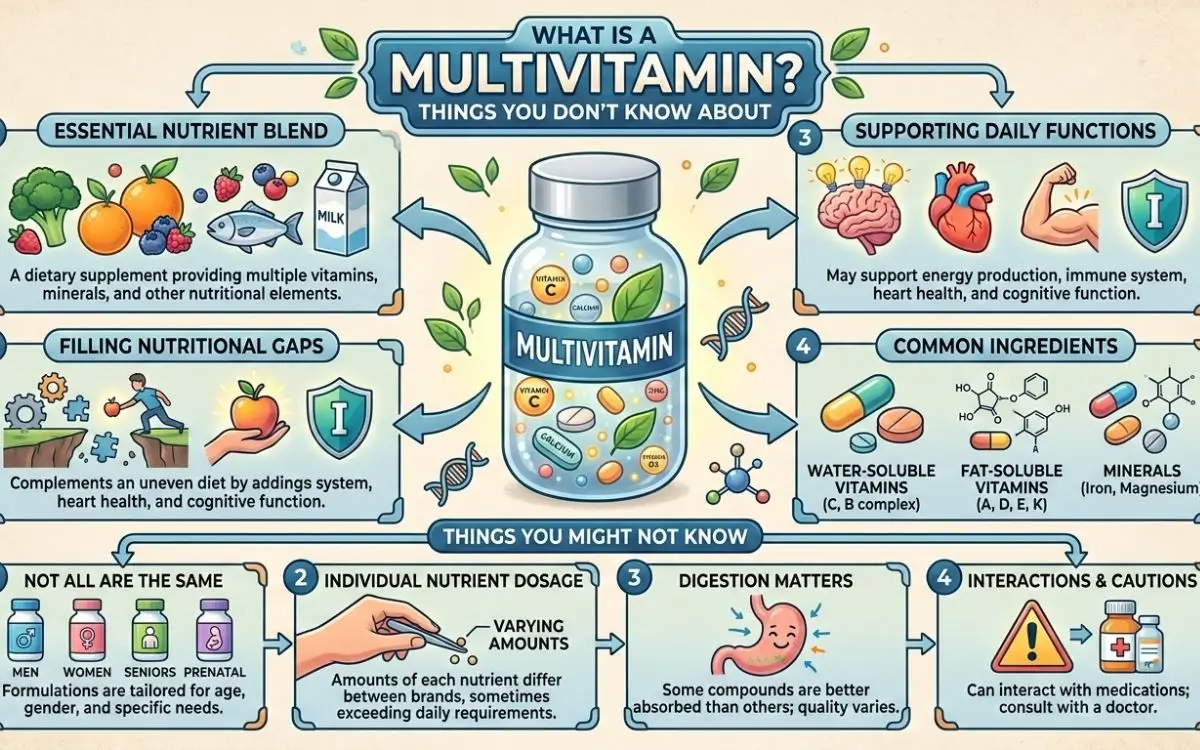
In simple terms, multivitamins are supplements that contain a combination of essential vitamins and minerals designed to support overall health. These nutrients help the body perform hundreds of vital functions, from producing energy to supporting immune defense and maintaining healthy skin, bones, and organs.
A multivitamin is a dietary supplement formulated to provide a range of essential micronutrients that the body needs but may not receive enough of from food alone.
Most multivitamins contain the following ingredients:
Unlike single-nutrient supplements (such as vitamin D or iron), multivitamins aim to provide broad nutritional coverage in a convenient dose. They are available in various forms, including multivitamin tablets, capsules, gummies, powders, and liquids.
Multivitamins support the body’s fundamental biological processes. Each nutrient plays a specific role, and together, they contribute to overall health.
The functions of the key nutrients are as follows:
B vitamins (especially B12, B6, and B1) help convert carbohydrates, fats, and proteins into usable energy.
Vitamin C, vitamin D, zinc, and selenium contribute to immune defense by supporting white blood cell function and reducing oxidative stress.
Vitamin D, calcium, magnesium, and vitamin K work together to maintain bone density and strength.
B vitamins, iron, iodine, and omega-3 fatty acids (if included) help support concentration, mood regulation, and neurological function.
Biotin (B7), vitamin E, vitamin A, and zinc support tissue repair and cell turnover processes.
In short, multivitamins help “fill nutritional gaps” in the diet of individuals.
Even with a balanced diet, consistently meeting all daily nutrient requirements is challenging.
Modern lifestyles often include the following:
Certain groups are at a higher risk of developing deficiencies.
This is one of the most frequently asked questions in this field.
Research has shown that multivitamins are most effective in correcting or preventing vitamin deficiencies. They are not a magic pill and cannot replace a healthy diet.
Large studies suggest:
However, they have not been proven to prevent chronic diseases in otherwise healthy and well-nourished individuals.
Think of a multivitamin as nutritional insurance, not a cure-all for health problems.
While formulas vary by multivitamin brand and target audience, common ingredients include
Some advanced formulations may also include the following:
The exact dosage of each nutrient varied. Some multivitamins provide 100% of the Daily Value (DV), whereas others provide higher or lower amounts depending on the formula.
Not all multivitamins are identical. These models are often tailored to meet specific requirements.
It is typically low in iron and formulated to support heart and prostate health.
It often includes higher iron levels (for menstruating women) and nutrients that support bone health.
They contain higher levels of folate (B9), iron, and iodine to support fetal development.
May contain higher levels of vitamin D, B12, and calcium to support the age-related nutritional needs of older adults.
Lower dosages are often available in chewable or gummy forms.
Most multivitamins are best taken at the following times:
Fat-soluble vitamins (A, D, E, and K) are better absorbed when consumed with meals that contain fat. Avoid taking multivitamins on an empty stomach unless directed by a healthcare provider.
For most healthy individuals, multivitamins are safe when taken as directed by the manufacturer.
However, excessive intake of certain nutrients can cause health issues. For example:
It is important not to combine multiple supplements that overlap in their nutrient content without checking the total nutrient intake.
If you are pregnant, taking medications, or managing a medical condition, consult a healthcare professional before starting multivitamin supplements.
You may benefit from multivitamins if you:
A multivitamin is a dietary supplement that combines essential vitamins and minerals to support overall health and prevent nutrient deficiencies.
It supports:
Although it cannot replace a nutritious diet, it can serve as a practical tool to help maintain a balanced micronutrient intake in today’s fast-paced world. If you are unsure whether a multivitamin is right for you, speak with a healthcare professional to assess your individual needs. When used correctly, multivitamins can be a simple and effective way to support long-term wellness.
In simple terms, multivitamins are supplements that contain a combination of essential vitamins and minerals designed to support overall health. These nutrients help the body

Johar Town, Lahore, 54000
Monday – Saturday: 9:00 am – 5:00pm
Sunday: Closed
Copyright © 2026 Vitafit– All Rights Reserved. Designed by Web Designing Company

WhatsApp us